
Geopolitics
Key Points
- US naval forces sank multiple Iranian speedboats on May 11, 2026
- Incident follows US-Israeli airstrikes on February 28, 2026, targeting Iran's Supreme Leader
- Global oil markets repriced by $100 billion, 15% shift in risk assessments
- Fears of broader regional war and further oil supply disruptions
- Watch for US-Iran diplomatic moves and oil supply data
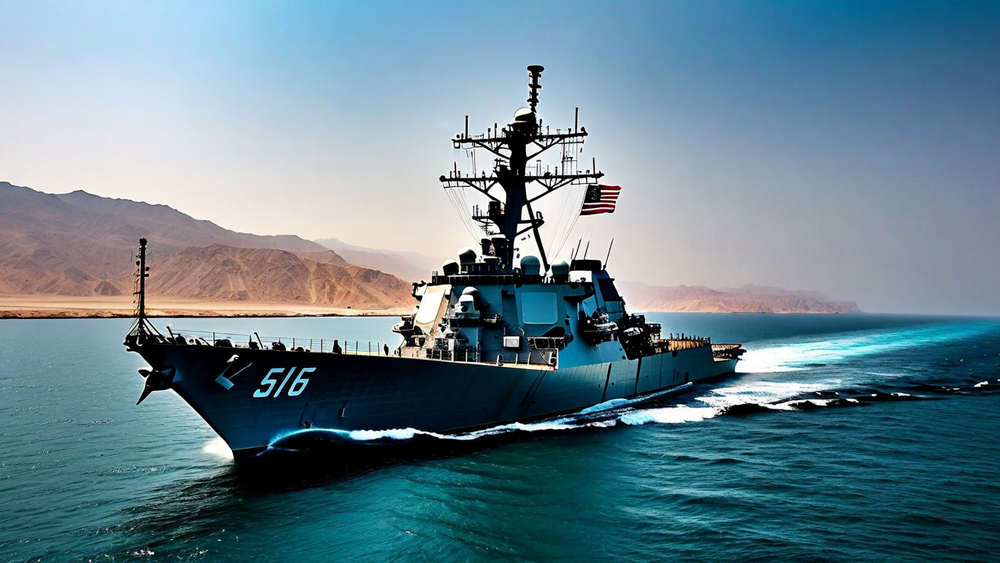
In a dramatic escalation of Middle East geopolitical tensions, US naval forces sank multiple Iranian speedboats in the Strait of Hormuz on May 11, 2026. This aggressive maneuver by the US Navy came just days after the US-Israeli airstrikes on February 28, 2026, which targeted Iran's Supreme Leader Ali Khamenei and nuclear sites. The retaliatory strikes by Iran on Israel, UAE oil refineries, and US bases have intensified fears of a broader regional war, with significant implications for global oil markets and regional stability. The Strait of Hormuz, a critical chokepoint for global oil shipments, has seen a partial closure by Iran, exacerbating supply fears. The immediate repricing of $100 billion in global oil markets and a 15% shift in Middle East geopolitical risk assessments underscore the severity of the situation. The specter of a prolonged conflict looms large, with potential long-term destabilization of the Middle East and increased militarization of the region. On May 11, 2026, US naval forces sank multiple Iranian speedboats in the Strait of Hormuz following aggressive maneuvers near American warships. This incident is a direct response to the US-Israeli airstrikes on February 28, 2026, which targeted Iran's Supreme Leader Ali Khamenei and nuclear sites. Iran's retaliatory missile strikes on Israel, UAE oil refineries, and US bases have heightened fears of a broader regional war. The partial closure of the Strait of Hormuz by Iran has further escalated tensions, leading to significant disruptions in global oil supply chains. The named actors in this conflict include US Naval Forces, Israeli Defense Forces, and Iran's military under the late Supreme Leader Ali Khamenei. The magnitude of the event is underscored by the $100 billion repricing in global oil markets and a 50 basis points increase in US Treasury yields. The root cause of this escalating conflict is the long-standing geopolitical tensions and strategic rivalry between the United States and Iran. The causal chain begins with the US-Israeli airstrikes on February 28, 2026, targeting Iran's Supreme Leader and nuclear sites. This provoked a direct response from US naval forces, who sank Iranian speedboats in the Strait of Hormuz on May 11, 2026. Iran's retaliatory missile strikes on Israel, UAE oil refineries, and US bases have further escalated the situation, leading to fears of a broader regional war. This is a classic example of the security dilemma, where actions taken by one state to increase its security lead to a decrease in the security of others, prompting further escalatory actions. The historical precedent is the 1988 USS Vincennes incident, which increased tensions but did not lead to direct war, with resolution taking several months. The underpriced risk in this scenario is the potential for a prolonged conflict leading to significant global economic disruption. The immediate market reaction to the sinking of Iranian speedboats and the escalating conflict has been significant. Oil futures spiked immediately due to fears of a complete closure of the Strait of Hormuz, with global oil markets repriced by $100 billion. Defense sector stocks surged as investors anticipated increased military spending and conflict. Safe-haven assets like gold and US Treasuries saw inflows, driving yields down despite the 50 basis points increase in US Treasury yields due to risk-on sentiment. Regional equities and currencies, particularly those in the Middle East, plummeted as investors fled risk. The transmission mechanism from event to market is clear: the threat to oil supply through the Strait of Hormuz directly impacts oil prices, which in turn affects global economic growth expectations. This leads to a flight to safety in assets like gold and Treasuries, while defense sector stocks benefit from anticipated increased military spending. The cross-asset spillover is evident in the simultaneous movement of oil prices, defense stocks, and safe-haven assets. The single most important question remaining is whether this escalation will lead to a broader regional war. Key data releases to watch include any diplomatic moves between the US and Iran, updates on the status of the Strait of Hormuz, and any further military actions by either side. The upcoming OPEC meeting on June 5, 2026, will be crucial in assessing the impact on global oil supply and prices. Investors should also monitor any changes in US Treasury yields and defense sector stock performance as indicators of market sentiment towards the conflict. Prediction markets for oil/gas prices, defense sector stocks, and Middle East currencies are expected to see significant repricing. Oil futures are likely to remain volatile, with a higher probability of further spikes. Defense sector stocks may continue to rise, while Middle East currencies could face further depreciation. The key upcoming catalyst will be the OPEC meeting on June 5, 2026, which will provide crucial insights into the impact on global oil supply.
Major Impact Areas
- Oil futures95%
- Defense sector stocks85%
- Gold prices75%
- US Treasury yields65%
- Middle East equities55%
Predifi is an on-chain prediction market platform. Join the waitlist →
#geopolitics #prediction-markets #market-analysis #us-iran-conflict #middle-east-tensions #oil-market-volatility #regional-war-risk