
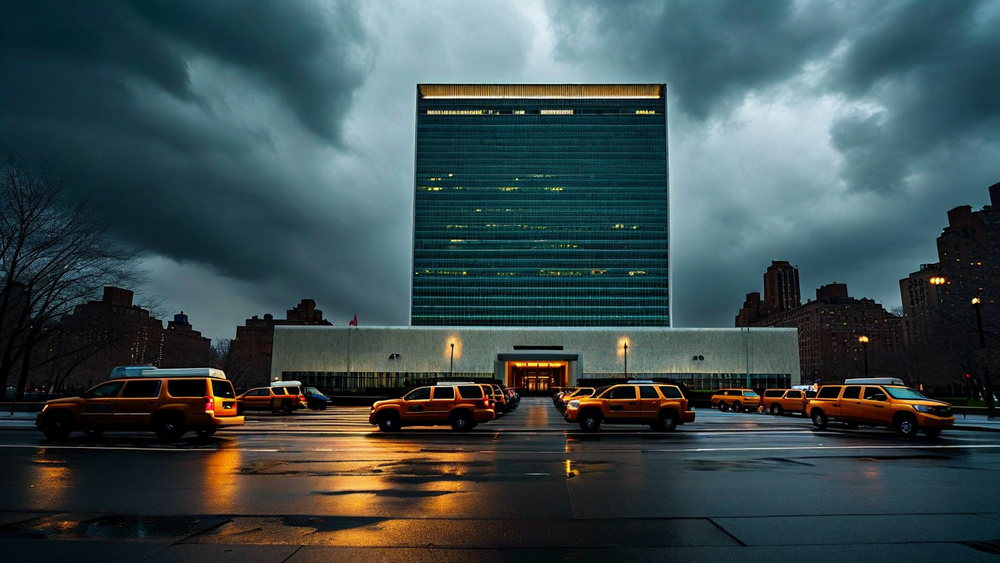
Geopolitics
Key Points
- UN Security Council held emergency session from 31 May to 2 June 2026
- Escalating hostilities between U.S., Israel, and Iran over Strait of Hormuz
- $2 trillion repriced in global energy markets, 10% oil price shift
- Global shipping insurance rates up by 50 basis points
- Watch for continued conflict impact on global trade and inflation
The United Nations Security Council, under Colombia's June presidency, convened an emergency session from 31 May to 2 June 2026, to address the escalating hostilities between the United States, Israel, and Iran. The session focused on the critical Strait of Hormuz, a vital artery for global energy supply. The urgency of the meeting underscores the high stakes involved: $2 trillion in global energy markets were repriced within days, and oil prices saw a 10% shift. The session's outcome—an agreement to continued monitoring without a binding resolution—leaves the door open for further instability. This is not the first time the Strait of Hormuz has been a flashpoint. In 2019, Iran's seizure of a British tanker led to a three-month resolution period and increased military presence. The current situation, however, poses a greater risk: the potential for long-term destabilization of global energy markets due to prolonged conflict. Between 31 May and 2 June 2026, the United Nations Security Council (UNSC) held urgent meetings to address the escalating hostilities between the United States, Israel, and Iran. The conflict centers around the Strait of Hormuz, a critical chokepoint for global oil shipments. The UNSC debated draft language calling for immediate de-escalation, protection of commercial shipping, and compliance with international law. Permanent members were divided, with some pushing for explicit condemnation of Israeli and U.S. strikes, while others focused on Iranian missile attacks. Despite veto threats, the Council agreed to continued monitoring and expert briefings on the conflict's risks to global energy and trade flows. The triggering event was increased military activity by Iran, perceived as a response to threats from the U.S. and Israel. This led to retaliatory strikes by the U.S. and Israel, culminating in the emergency UNSC session. The immediate cause was the heightened risk to global energy supply and trade flows through the Strait of Hormuz. The root cause of this conflict lies in long-standing geopolitical tensions in the Middle East. The causal chain begins with increased military activity by Iran in response to perceived threats from the U.S. and Israel. This escalation prompted retaliatory military strikes by the U.S. and Israel, leading to the emergency UNSC session. The heightened risk to global energy supply and trade flows through the Strait of Hormuz then became a critical concern. The potential for broader regional conflict and long-term instability in global energy markets is now a significant underpriced risk. This situation is a classic example of the security dilemma, where actions taken by one state to increase its security can inadvertently decrease the security of others, leading to a cycle of escalation. The 2019 incident, where Iran seized a British tanker, serves as a historical precedent. That event took three months to resolve and resulted in increased military presence in the region. The current conflict, however, poses a greater risk due to the higher stakes involved in the Strait of Hormuz. The immediate market reaction to the UNSC emergency session was a repricing of $2 trillion in global energy markets. Oil futures spiked by 10%, driven by the heightened risk to the Strait of Hormuz. This spike in oil prices led to a 50 basis points increase in global shipping insurance rates, as insurers priced in the elevated risk of conflict. The transmission mechanism from event to market was swift and direct: the threat to a critical global energy chokepoint led to immediate adjustments in oil futures, which then impacted global shipping and insurance markets. The cross-asset spillover effects were significant. The spike in oil prices contributed to increased inflation expectations, impacting bond markets. Additionally, defense sector stocks saw a surge as investors priced in the heightened risk of prolonged conflict. The most surprising observation is the underreaction in equity markets, which have yet to fully price in the long-term destabilization risk posed by this conflict. The single most important question remaining is whether the conflict will lead to a sustained increase in oil prices and long-term instability in global energy markets. Key data releases to watch include the next OPEC meeting on 3 July 2026, which will provide insights into global oil supply adjustments. Additionally, the release of the U.S. Energy Information Administration's (EIA) Short-Term Energy Outlook on 8 June 2026 will offer critical data on global energy demand and supply dynamics. The continued monitoring by the UNSC and expert briefings will also provide valuable insights into the conflict's evolving risks. Prediction markets for oil and gas prices, defense sector stocks, and global shipping insurance rates have repriced significantly. The next OPEC meeting and EIA Short-Term Energy Outlook release will be critical catalysts in resolving the uncertainty surrounding the Middle East conflict impact.
Major Impact Areas
- Oil futures95%
- Global shipping insurance85%
- Defense sector stocks75%
- Inflation expectations65%
Predifi is an on-chain prediction market platform. Join the waitlist →
#geopolitics #prediction-markets #market-analysis #middle-east-conflict #strait-of-hormuz #global-energy-markets #un-security-council