
Politics
Key Points
- Iran's retaliatory strikes follow U.S. airstrikes, triggering UN emergency session
- Strait of Hormuz chokepoint risks cause 5% spike in oil prices
- Middle East sovereign bond spreads widen by 100 basis points
- Gulf Cooperation Council alliances face long-term destabilization risk
- Markets await next moves from U.S. and Iran
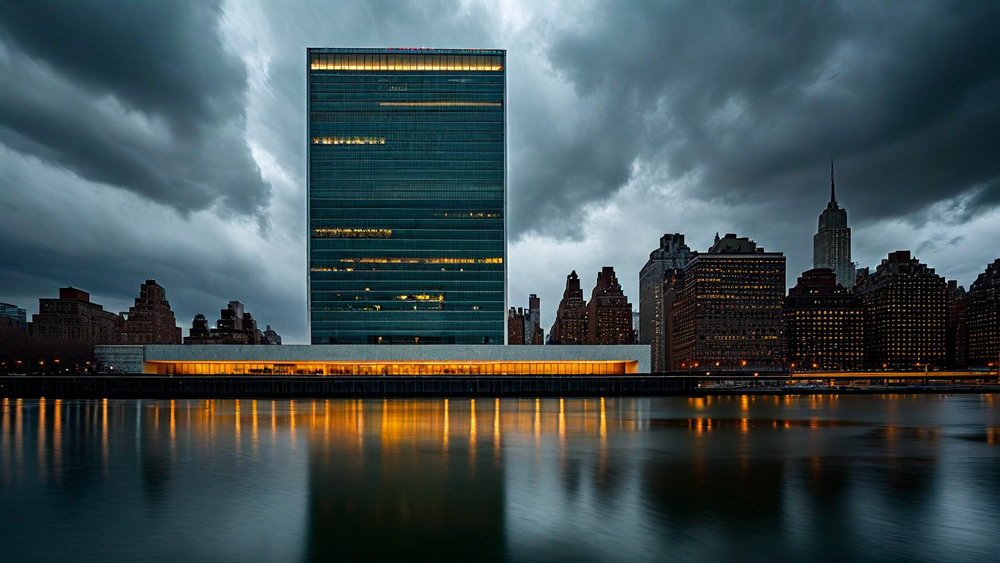
The UN Security Council convened an emergency session in New York, responding to Iranian attacks on targets in Bahrain and Kuwait. These attacks, in turn, were a direct retaliation to earlier U.S. airstrikes, escalating tensions over the Strait of Hormuz. The session highlighted the precarious state of regional security and the vulnerability of global energy shipments passing through one of the world’s most critical chokepoints. The immediate consequence of this geopolitical tinderbox is a repricing of $100 billion in global energy markets, with oil futures spiking by 5% and Middle East sovereign bond spreads widening by 100 basis points. The long-term implications, however, could be even more profound, potentially leading to a realignment of regional alliances and security arrangements. The UN Security Council held an emergency session to address the escalating tensions in the Gulf following Iranian attacks on targets in Bahrain and Kuwait. These attacks were in direct response to earlier U.S. airstrikes on Iranian assets, perceived as a threat by Tehran. The session involved urgent briefings by UN officials and Council members on the risks to regional security and the stability of global energy shipments through the Strait of Hormuz. Diplomats discussed possible monitoring or de-escalation mechanisms, but no binding resolution was adopted, leaving the situation unstable and markets on high alert. This crisis is rooted in longstanding geopolitical tensions over the Strait of Hormuz, a critical chokepoint for global oil shipments. The causal chain began with U.S. airstrikes on Iranian assets, perceived as a threat by Tehran. Iran retaliated with attacks on Bahrain and Kuwait, leading to the UN Security Council's emergency session. The immediate market reaction was a 5% spike in oil prices and a 100 basis points increase in Middle East sovereign bond spreads. This is a classic example of a geopolitical risk transmitting through financial markets, similar to the 1980 Iran-Iraq War, which took eight years to resolve, and the 2003 Iraq War, which led to over a decade of regional instability. The underpriced risk here is the potential long-term destabilization of Gulf Cooperation Council (GCC) alliances. The immediate market reaction to the Gulf crisis has been a repricing of $100 billion in global energy markets. Oil futures contracts spiked by 5% due to the heightened risks associated with the Strait of Hormuz. This volatility quickly transmitted to energy sector ETFs, which saw increased trading volumes and price swings. Middle East sovereign bonds experienced a sell-off, with spreads widening by 100 basis points as investors priced in higher geopolitical risk. The transmission mechanism from event to market was swift and severe, highlighting the interconnectedness of geopolitical events and financial markets. Cross-asset spillover effects are already evident, with safe-haven assets like gold and the U.S. dollar seeing increased demand. Markets are now keenly watching for any signs of further escalation or de-escalation from both the U.S. and Iran. Key data releases to watch include U.S. energy department reports on oil reserves and production capabilities, as well as any statements from the Iranian Revolutionary Guard. The next UN Security Council meeting, scheduled for two weeks from now, will be crucial in assessing the potential for diplomatic solutions. The single most important question remaining is whether this crisis will lead to a prolonged conflict, similar to the Iran-Iraq War, or if diplomatic efforts can stabilize the situation. Prediction markets related to geopolitical risk and energy prices are experiencing significant repricing. The probability of further military confrontations in the Gulf has increased, while the likelihood of a swift diplomatic resolution has decreased. The next UN Security Council meeting will be a key catalyst for further market movements.
Major Impact Areas
- Global oil futures95%
- Middle East sovereign bonds85%
- Energy sector ETFs80%
- Safe-haven assets (gold, USD)70%
Predifi is an on-chain prediction market platform. Join the waitlist →
#politics #prediction-markets #market-analysis #gulf-crisis #energy-markets #geopolitical-risk