
Climate
Key Points
- Heavy rainfall triggered flash floods in Guangdong, Guangxi, and Fujian on 18 May
- China Meteorological Administration reported daily totals exceeding 200 mm
- Tens of thousands evacuated, high-speed rail services suspended
- $10 billion in manufacturing losses, 5% regional GDP shift
- Watch for insurance market repricing and global supply chain volatility
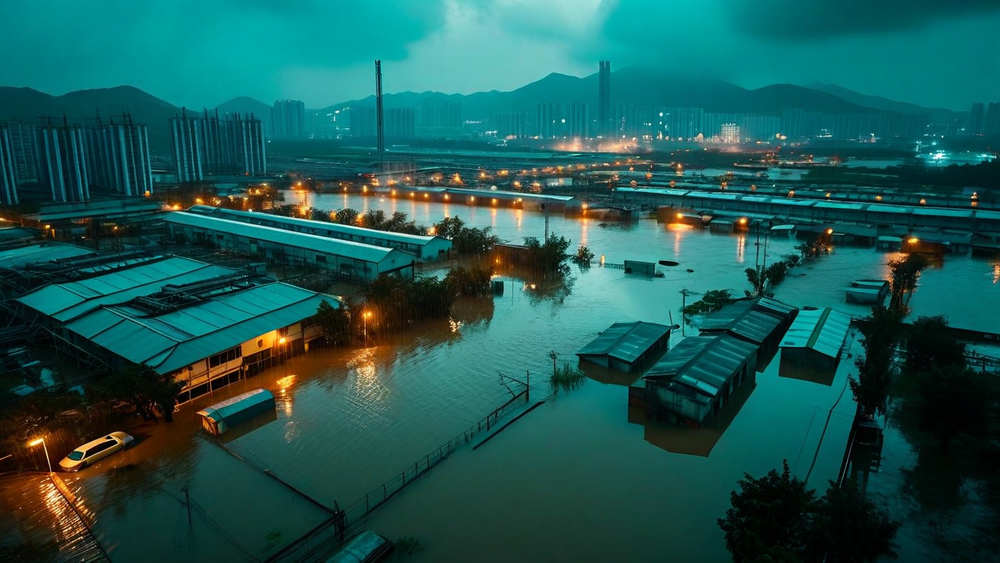
On 18 May, Southern China was battered by torrential rains that triggered flash floods and river overflows in Guangdong, Guangxi, and Fujian provinces. The deluge, driven by a persistent frontal system and southwest monsoon moisture, led to the evacuation of tens of thousands and the temporary suspension of high-speed rail services. The economic toll is staggering: an estimated $10 billion in manufacturing losses and a 5% shift in regional GDP. This is not just a natural disaster; it's a stark reminder of the economic vulnerabilities exposed by climate change. The stakes are high. The Pearl River Delta, a critical manufacturing hub, faces potential long-term disruption. The flooding is a wake-up call for global supply chains, highlighting the underpriced risk of climate-induced economic shocks. The China Meteorological Administration (CMA) reported that heavy rainfall, locally exceeding 200 mm, was caused by a persistent frontal system and southwest monsoon moisture. This led to flash floods and river overflows in Guangdong, Guangxi, and Fujian provinces on 18 May. Xinhua News Agency and provincial emergency management departments confirmed tens of thousands of evacuations, localized landslides, and transport disruptions, including the temporary suspension of high-speed rail services near Guangzhou and road closures in mountainous counties. Local governments activated Level-III and Level-IV emergency responses, and the Ministry of Emergency Management deployed rescue teams, warning of further economic disruption to electronics and textiles manufacturing clusters in the Pearl River Delta if rainfall persists. The immediate economic impact is severe. The flooding is expected to cause $10 billion in manufacturing losses, a 5% shift in regional GDP, and a 100 basis points increase in insurance premiums. The Ministry of Emergency Management has warned of potential long-term impacts on regional economic growth and supply chain resilience. The causal chain begins with climate change exacerbating weather patterns, leading to a persistent frontal system and southwest monsoon moisture that caused heavy rainfall. This, in turn, triggered flash floods and river overflows in Guangdong, Guangxi, and Fujian provinces, resulting in evacuations and transport disruptions. The immediate consequence was economic disruption to electronics and textiles manufacturing clusters in the Pearl River Delta. If rainfall persists, the long-term impact could be a significant shift in regional economic growth and supply chain resilience. This is a classic example of the underpriced risk of climate-induced economic shocks. Historical precedent shows that the 2020 flooding in the Yangtze River basin caused $30 billion in damages and took 12 months to resolve. The current flooding in Southern China could follow a similar trajectory, highlighting the need for better risk assessment and mitigation strategies in climate-vulnerable regions. The initial market reaction to the flooding in Southern China was a drop in local stock indices due to manufacturing disruptions. This was followed by increased volatility in global supply chain-dependent stocks as investors grappled with the potential for prolonged disruptions. The eventual repricing of climate risk in insurance markets is expected, with a 100 basis points increase in premiums reflecting the heightened risk of future climate-induced disasters. The transmission mechanism from event to market is clear: manufacturing disruptions lead to supply chain bottlenecks, which in turn cause volatility in global markets. The cross-asset spillover effect is evident as investors re-evaluate the risk profiles of companies with significant exposure to climate-vulnerable regions. This repricing is not limited to equities but extends to bonds, commodities, and insurance markets, creating a complex web of interdependencies. The single most important question remaining is whether the rainfall will persist, leading to further economic disruption. Investors should watch for updates from the China Meteorological Administration and the Ministry of Emergency Management. Key data releases to monitor include manufacturing output figures, regional GDP growth rates, and insurance market premium adjustments. The catalyst that resolves the uncertainty will be the cessation of rainfall and the subsequent assessment of long-term economic damage. Prediction markets focused on energy transition, extreme weather events, and climate policy are most correlated with this event. The catalyst that resolves the uncertainty will be the cessation of rainfall and the subsequent assessment of long-term economic damage.
Major Impact Areas
- Global supply chain disruption index85%
- China manufacturing PMI72%
- Insurance market premium adjustments65%
Predifi is an on-chain prediction market platform. Join the waitlist →
#climate #prediction-markets #market-analysis #china-floods #supply-chain-disruption #insurance-market-repricing