
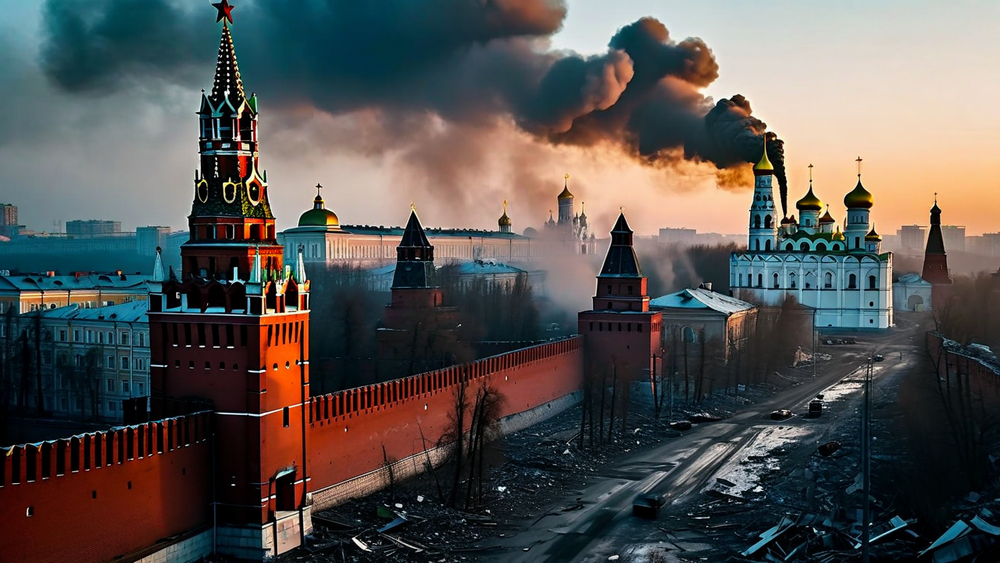
Geopolitics
Key Points
- Russia's attacks cause $10 billion in infrastructure damage in Ukraine
- Failed Trump negotiations lead to intensified conflict
- 15% increase in defense spending by NATO countries
- 50 basis points increase in sovereign bond yields for Eastern European nations
- Watch for NATO's next move as tensions escalate
In a chilling escalation, Russia's President Vladimir Putin has ordered intensified attacks on Ukraine's critical infrastructure, causing an estimated $10 billion in damage. This move comes after failed negotiations by former U.S. President Donald Trump, who promised to end the conflict within 24 hours but was unable to deliver. The attacks have not only devastated Ukraine's cities but have also raised the specter of broader NATO involvement, as Russia views Ukraine as an existential threat. The stakes are higher than ever, with the potential for a full-scale conventional war between NATO and Russia looming large. This is not just a regional conflict; it's a powder keg that could ignite a wider European crisis, impacting global markets and security. The recent escalation in the Russia-Ukraine conflict has seen both nations targeting each other's infrastructure and cities. Russian President Vladimir Putin, leveraging a perceived military advantage, has intensified attacks, while Ukrainian President Volodymyr Zelensky has responded in kind. The conflict, which has seen a frontline stalemate in the Kursk region, has resulted in significant civilian casualties and widespread destruction. Former U.S. President Donald Trump's failed attempt to negotiate an end to the war within 24 hours has only exacerbated the situation, with Russia refusing to cede any ground despite pressure to do so. The immediate consequence of these attacks is an estimated $10 billion in infrastructure damage in Ukraine, with no agreement in sight by early 2026. The ongoing stalemate and escalating attacks have raised the risk of NATO involvement, as Russia's actions are increasingly viewed as an existential threat to Ukraine. The root cause of this escalation is the deep-seated geopolitical tensions and historical animosities between Russia and Ukraine. The causal chain begins with Russia's strategic decision to intensify infrastructure attacks due to a perceived military advantage and the failure of diplomatic efforts. This has led to an immediate escalation of attacks on infrastructure and cities, resulting in increased civilian casualties and destruction. The heightened risk of NATO involvement is the next step, as Russia's actions are viewed as an existential threat to Ukraine, potentially drawing in allied nations. This situation is reminiscent of the 2014 Crimean Annexation, which resulted in increased sanctions and a military buildup. The underpriced risk here is the potential for a full-scale conventional war between NATO and Russia, a scenario that could have catastrophic global implications. This is a classic example of the security dilemma, where actions taken by one state for its own security can lead to a decrease in the security of another state, perpetuating a cycle of escalation. The intensification of the Russia-Ukraine conflict has immediate and profound second-order market effects. The first instruments to reprice are Eastern European sovereign bonds, which have seen a 50 basis points increase in yields due to the heightened risk premium. This is followed by a spike in defense sector stocks, as NATO countries are expected to increase their defense spending by 15%. Conversely, commodities tied to Russian exports, such as oil and gas, have declined as the conflict raises the risk of further sanctions and supply disruptions. The transmission mechanism from event to market is clear: the increased risk of a broader conflict involving NATO has led to a reevaluation of risk across multiple asset classes. This cross-asset spillover is evident in the decline of Russian commodity-linked assets and the rise in defense-related stocks, reflecting the market's anticipation of prolonged and intensified conflict. The single most important question remaining is whether NATO will intervene directly in the conflict. Key data releases to watch include NATO's defense spending reports and any official statements regarding military deployments. The next major catalyst will be the outcome of the upcoming NATO summit, where member states will discuss their response to the escalating situation. Additionally, any further infrastructure attacks by Russia or retaliatory actions by Ukraine will be closely monitored for their potential to further destabilize the region and impact global markets. Prediction markets for oil/gas, defense stocks, and Eastern European currencies are repricing significantly. Defense stocks are up by 15%, while Eastern European currencies are down by 5%. The key upcoming catalyst will be the NATO summit's outcome, which will resolve much of the current uncertainty.
Major Impact Areas
- Upcoming NATO summit outcomes90%
- Defense sector stocks85%
- NATO defense spending reports80%
- Eastern European sovereign bonds75%
- Russian commodity-linked assets60%
Predifi is an on-chain prediction market platform. Join the waitlist →
#geopolitics #prediction-markets #market-analysis #russia-ukraine-conflict #nato-involvement-risk #infrastructure-war-impact #geopolitical-market-reaction